History
Graffham's history stretches back thousands of years. The village has a rich past, reflected in its layout and many of its ancient buildings today. Read on to find out more.
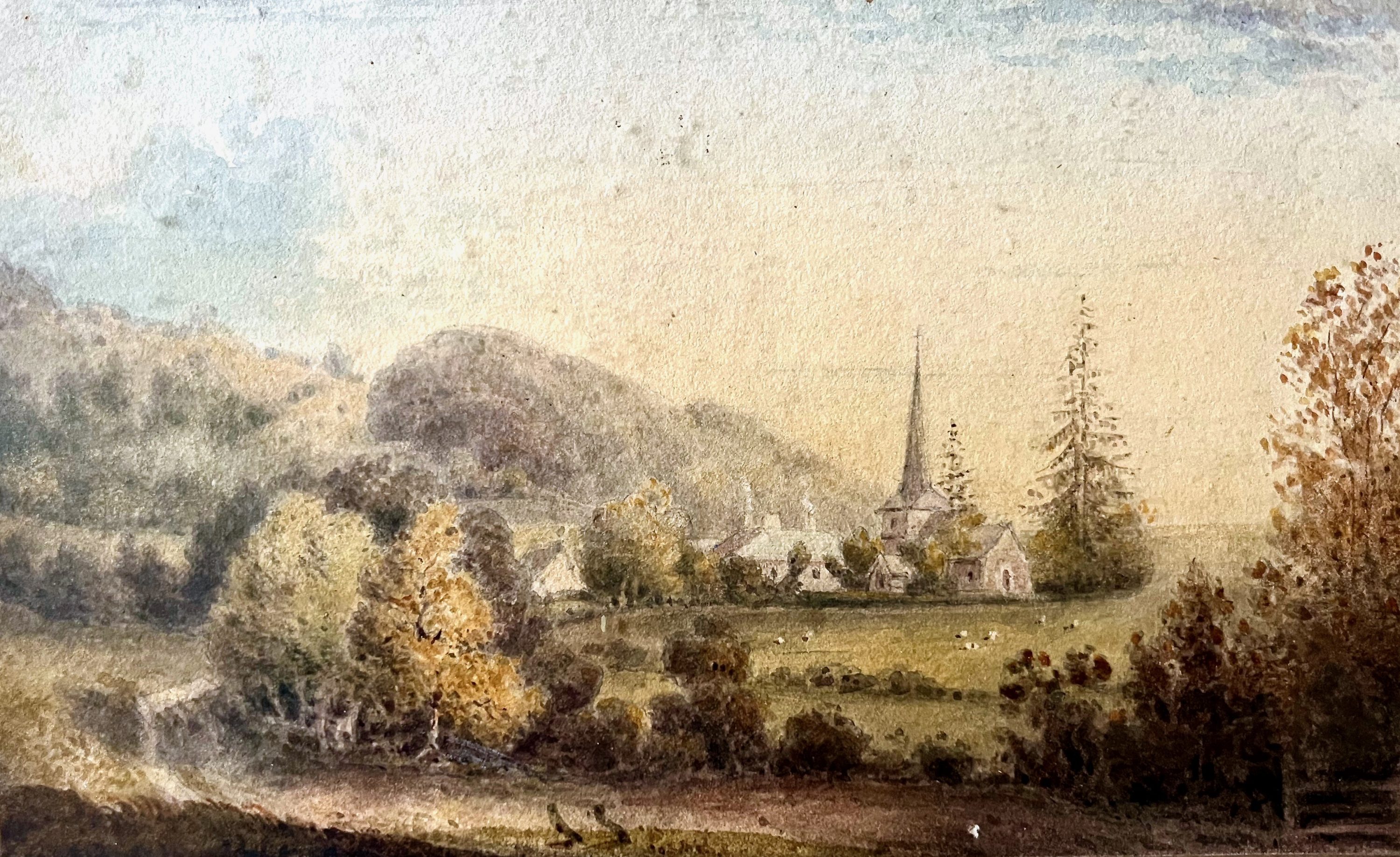


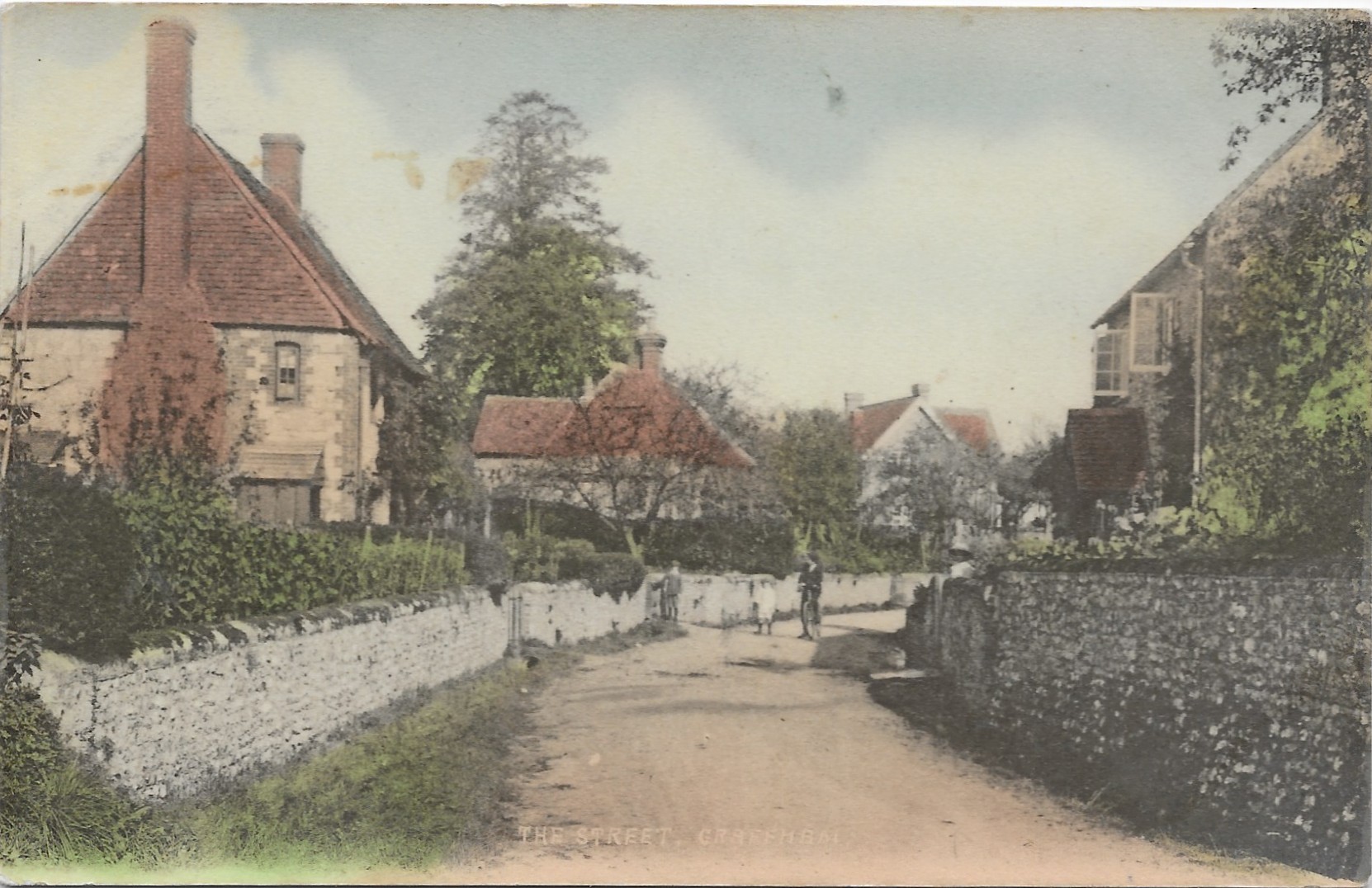

People have called Graffham home since prehistoric times. The parish is one of the richest around for bell barrows, bowl barrows and other tumuli in which Bronze Age folk buried their notable dead. There are also traces of a number of cross dyke field systems from those times.
They were followed a couple of millennia later by Romans. There are many finds of tiles and other pottery, particularly along the streams that wind through the village, from the Roman occupation of England.
After them, it Is thought that the Saxons arrived here by boat, along the River Rother. They built their homesteads and farms along the course of the bubbling springs of pure water, emerging at the foot of the Downs, filling chalk streams feeding into the Rother, to the north. This resulted in the north-south linear nature of the village that has remained to today.
The name Graffham comes from that old English era. There are many places in West Sussex whose name ends in ‘ham’, like our village. It means a homestead or farm. Scholars believe ‘Graff’ could refer to a ditch or grave – or, most likely, a grove. So Graffham likely means homestead by a grove.
The Normans were quick to take control of all of England after William I’s invasion of 1066. Historians suggest Graffham’s entry in the Domesday Book of 1086 indicates 100 souls lived here then. It definitely recorded a church here, probably a wooden construction, which the Normans soon vetreplaced with a stone building. Today’s font appears to date back to that Saxon era. While our church was heavily rebuilt in Victorian times, most of the pillars in its nave are from the 1100s. Its west doorway is from the 1300s while the entrance door to the vestry is from a century later. The oldest bell in the tower is dated 1621. The first recorded rector of Graffham was William de Wilmyngton, who served here from 1278 to 1294, while the earliest entry in our parish registers is from 3 May 1655. For centuries, the church has been named St Giles, after the patron saint of beggars, the poor, the disabled and disasters.
Several of today’s village houses also date back to those medieval times, including Church Farm (sometimes known as Thraves), Ladywell Cottage and Stewart’s Cottage.
The definitive history of the village, Graffham Through A Thousand Years, written by Frederick Barrett in 1953 to mark the coronation of Elizabeth II, records the lords who owned the Manor of Graffham from those Norman times until their estate was broken up just before World War II.
At the time of the Domesday Book, the Lord of the Manor was the king’s cousin, Roger de Montgomeri, who was Earl of Arundel and lord of the Rape of Chichester.
While the South Downs may have provided some protection from the many raiders who plundered England’s south coast over the centuries, evidence has been uncovered of villagers from here being held as slaves by Barbary pirates in Algeria in 1568.
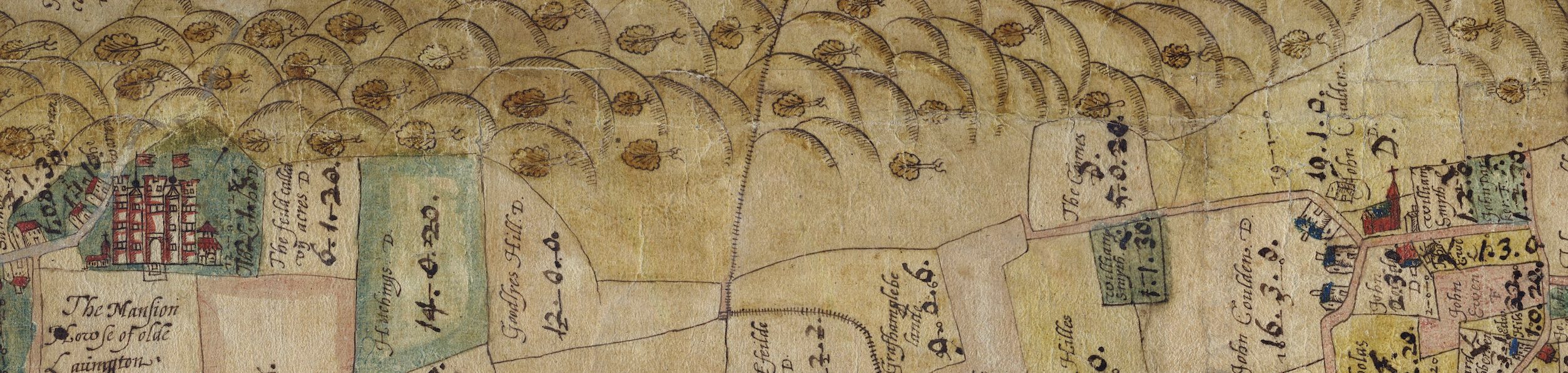
Graffham eventually left the hands of the Earls of Arundel in 1578, when it was sold to London ironmonger Giles Garton and his brother Francis. The new owners commissioned a map of their new lands. This Three Manors map, of 1597, which also covered Charlton and East Dean to the south, was until recently the oldest map held by West Sussex Records Office.
One Graffham quirk of fate is that ownership of the Manor frequently followed, unusually in those historic times, female lineage, with no males to inherit. This trend can be traced back to the 1600s, when it passed into the hands of the Orme family, through the marriage of Giles Garton’s granddaughter Mary to a Humphrey Orme.
Their great grandson successor was Garton Orme, who, according to local folklore, killed his wife Charlotte by pushing her down a well in 1727. Within weeks, he married the rector’s daughter Anne. When St Peter’s Church next to Lavington’s Manor House was being restored in 1845, a number of coffins interred there had to be moved. The one believed to contain the remains of Garton Orme’s first wife was unusually heavy. It was opened – and found to be full of stones. For many years, it was a custom of his successors as owners of the Manor to commemorate Garton Orme by spitting when they reached the edge of the estate. His misdeeds were said to have brought on himself and descendants a curse that no son would ever succeed to the estate – and so it came about. None of this prevented him from climbing up the social ladder to the position of Gentleman Usher of the Privy Chamber to the Princess of Wales (mother of King George III).
Upon Garton Orme’s death in 1758, the Manor moved to the Bettesworth family, through the marriage of his only surviving child, from his first marriage, another Charlotte, named after her mother.
In turn, her only surviving child, another daughter also called Charlotte, inherited the estate upon after the death of her parents. She was married by then, to an MP called John Sargent. Their eldest child, another John Sargent, became rector of the neighbouring parishes of Graffham and Woolavington. He never inherited the Manor, though, as he died before his mother.
With his sons dead before they reached 21 and his younger brother shot dead by a highwayman on Graffham Down, the Rev John Sargent’s eldest daughter Emily inherited the Manor from her grandmother – two months before she herself also died, in 1841, aged 24. Ownership then transferred to her widower, the noted Victorian bishop Samuel Wilberforce, son of the great anti-slavery campaigner.
The Rev Sargent was succeeded as Rector by his curate, Henry Manning, who was also his son-in-law through marriage to Emily’s younger sister Caroline. She died four years after they wed, aged 25. He continued to serve here, for a total of 18 years – before converting to Roman Catholicism, eventually becoming its prelate of all England, as Archbishop of Westminster, despite having been married.
After Bishop Wilberforce’s death, aged 67 in a fall from a horse while visiting his friend, Prime Minister William Gladstone, the Manor of Graffham passed, despite that ancient curse, to his eldest surviving son, Reginald, a soldier (the third man through the Kashmir Gate to end the Siege of Delhi after the Indian Mutiny in 1857) turned lawyer.
He sold the estate in 1903 to Black and White whisky baron James Buchanan (later Lord Woolavington), who was to become another generous benefactor to the village, bequeathing to it the Empire Hall, the recreation ground, war memorial and Homes of Rest almshouses.
Throughout all these nine centuries, from Norman times until just before World War II, the seat of the Lord of the Manor had been the ‘Mansion House of Olde Lavington’ in its various incarnations. The estate covered what are today the school’s Lavington Park grounds, Lavington Stud and Estate, Westerlands, Tagents, Nonnington and Haylands Farms and most of the villages of Graffham and neighbouring East Lavington.
When Lord Woolavington died in 1937, his daughter decided to break up the manorial estate and sell parts off in chunks, retaining for the family what is today’s Lavington Stud and Estate before her successors eventually put that on the market in 2021.
Lavington Park and its manor house was bought by David Euan Wallace MP, who served as Minister of Transport in the early months of World War II. He died in 1941 – and four of his five sons were killed in the conflict. His home here was requisitioned to serve as headquarters of what became the Royal Marine Commandos.
After peace was restored, Lavington Park and its manor house were bought by Seaford College, which had been forced to leave its original seaside base in East Sussex during the war – and which remains at Lavington Park today.
While agriculture in its broadest sense was the dominant industry in Graffham through almost all of its history, there Is evidence of other businesses here too, taking advantage of the area’s natural resources – brickworks, potters, glass manufacturers, charcoal makers and iron.
Notable recent residents have included Prime Minister Margaret Thatcher’s favourite cabinet minister Lord Young of Graffham and her PR guru Lord Bell, the trail-blazing horse trainer and breeder Florence Nagle, legal reformer and Marriage Guidance Council founder Claud Mullins, pioneering statistician and Winston Churchill’s wartime advisor Florence Nightingale David, architect Halsey Ricardo and his engineer son Sir Harry, His Highness The Nawab of Bahawalpur, actress Juliet Harmer, artists Ivor Hitchens and Maresco Pearce and weavers and craftsworkers Gwen and Barbara Mullins.
The village’s population now has grown to around 500, among them a pop star, best selling author, IT entrepreneur, international sports players, bankers, businessmen, lawyers, doctors and lots of people doing other everyday jobs, bringing up families or enjoying retirement – building on Graffham’s heritage to maintain it as the vibrant and friendly community is has always been.